


 152 / 220

臺灣農藥科學 第
1
期
150
一定的消長變化,此結果顯示,藥劑防治
的確影響茄園內捕食性天敵的活動。
二、茄園內重要害蟲蟎類在茄株
上之空間分布
未展開葉上薊馬科、蚜蟲科及細蟎科
每週所得
s
2
/m
比值均大於
1
(圖五
A1
及
B1
),表示此三類害蟲蟎在未展開葉上之
分布型屬聚集型,其中以細蟎科的聚集程度
最高,其次為蚜蟲科,此二類害蟲蟎之
s
2
/m
值在施藥區的變化較不施藥區為大,但薊
馬科之
s
2
/m
值在施藥區及不施藥區均維持
在
1 ~ 3
之間,呈穩定的波動。施藥區內細
蟎科的平均擁擠度最大,其次為薊馬科,
再其次為蚜蟲科,但不施藥區蚜蟲科則高
A
B
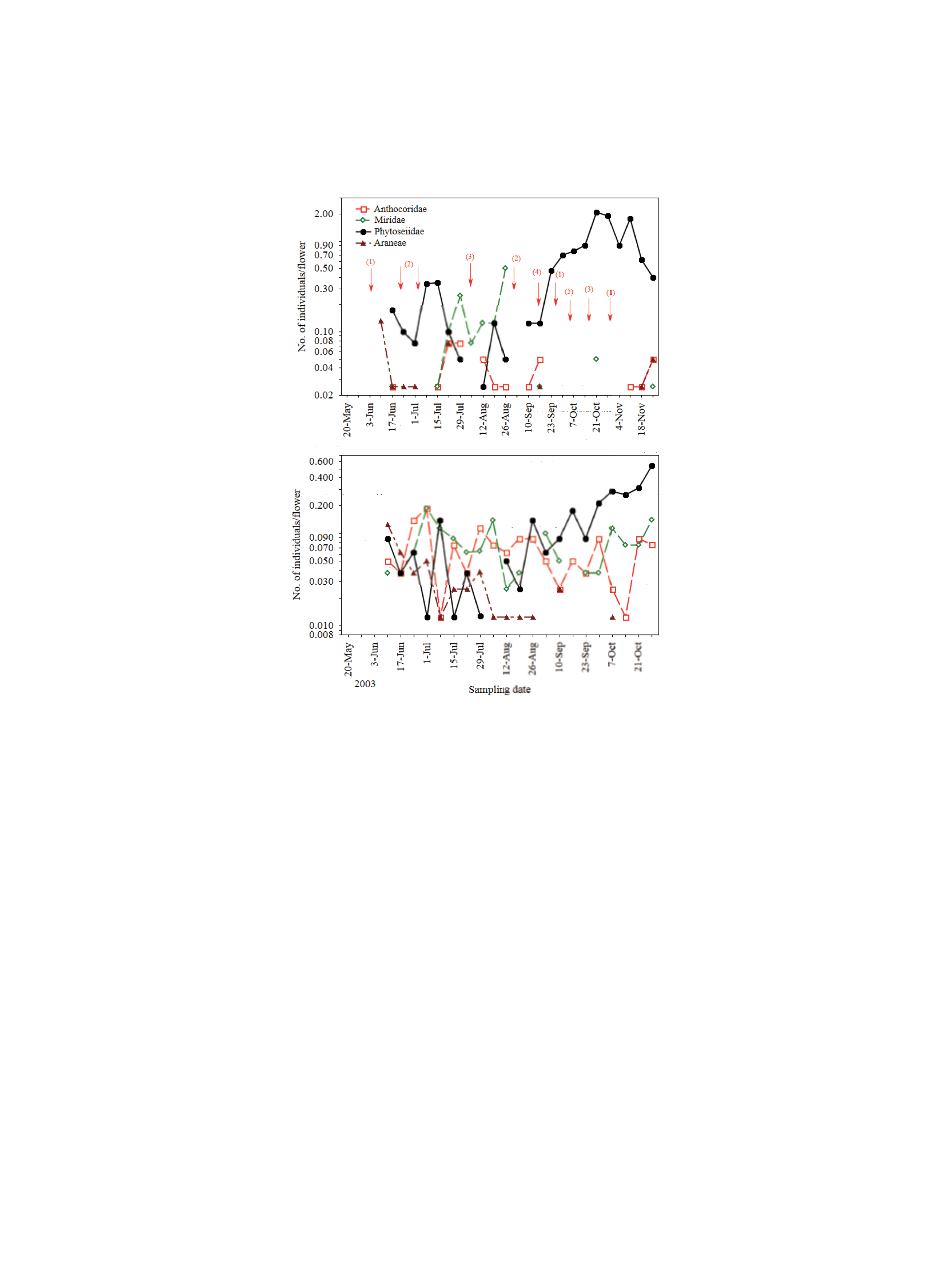
圖四、臺中市大里茄園施藥
(A)
及不施藥
(B)
管理其重要捕食性種類在花部隨時間之消長
變化。箭頭表示施藥日,數字表示藥劑種類,
(1)
益達胺、
(2)
賽洛寧、
(3)
第滅寧、
(4)
丁基加保扶、
(5)
密滅汀。
Fig. 4.
Fluctuation of predator family density on eggplant flowers in plots that (A) had been and
(B) had not been treated with pesticides. Arrows denote pesticide application date and
numerals indicate the kind of pesticide that was applied, as follows: (1) imidacloprid, (2)
λ
-cyhalothrin, (3) deltamethin, (4) carbosulfan, and (5) milbemectin.