


 151 / 220

茄株上共食群之空間分布型
149
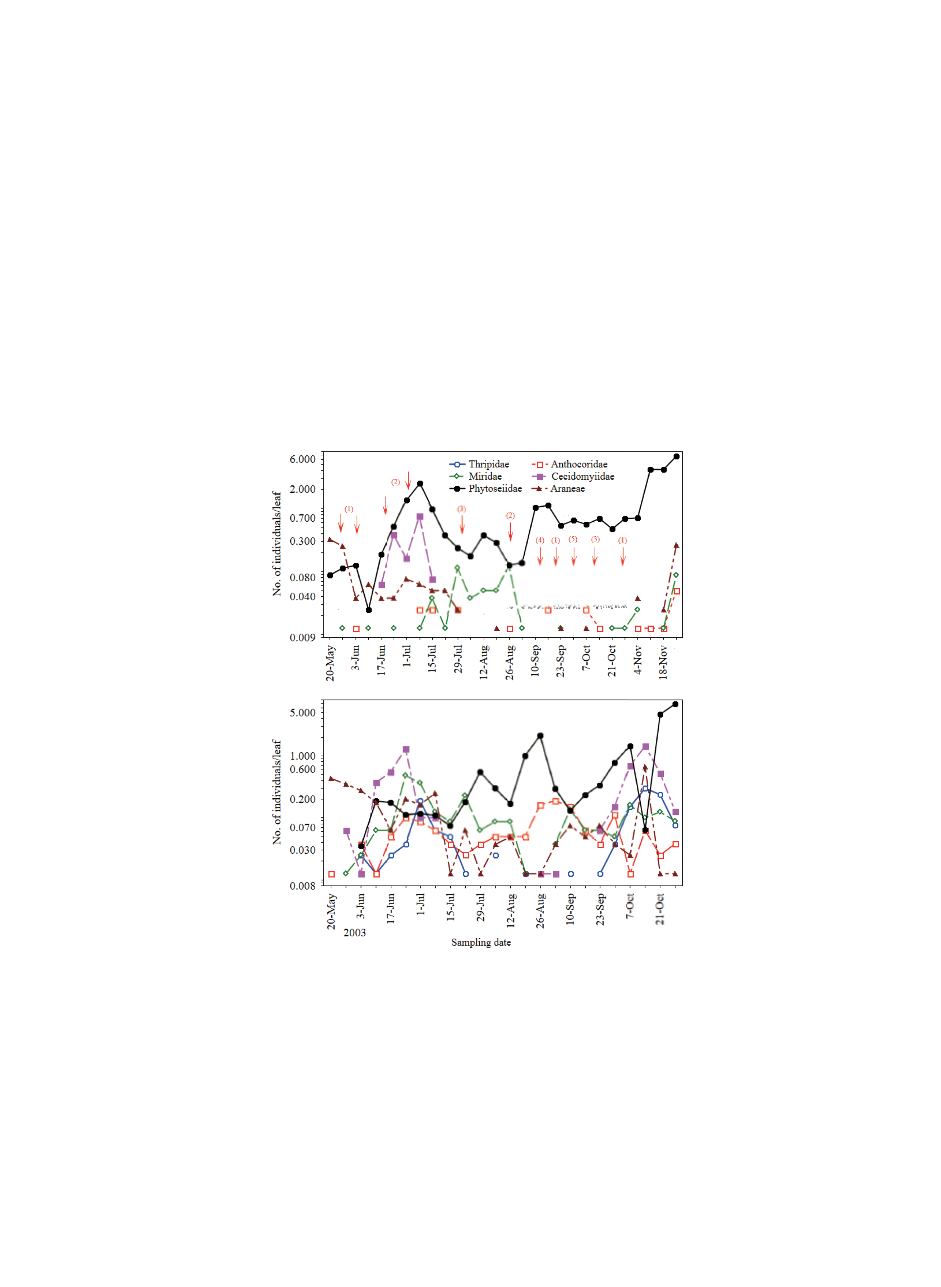
捕食性天敵在葉部發生種類較花上為
多
(
圖三及圖四
)
,種植初期以蜘蛛類的密
度較高,捕植蟎科、癭蚋科及盲椿象科隨
後增加,施藥區於
7
月中旬前以捕植蟎科
及癭蚋科為主,之後,盲椿象科取代癭蚋
科,而薊馬科有二個高峰期,分別在
7
月
前及
10
月間,該捕食性薊馬為印度食蟎薊
馬
(
Scolothrips indicus
Priesner)
,這些捕食性
天敵發生時間與葉部葉蟎及薊馬密度的消
長可能有關,至
8
月時,施藥區以捕植蟎
科為主。不施藥區因沒有受到藥劑因子的
干擾,害蟲蟎類及捕食天敵的種類及密度
的變化較施藥區為小。捕植蟎科雖為主要
捕食性天敵,但與其他種類的天敵仍維持
A
B
圖三、臺中市大里茄園施藥
(A)
及不施藥
(B)
管理其重要捕食性種類在葉部隨時間之消長
變化。箭頭表示施藥日,數字表示藥劑種類,
(1)
益達胺、
(2)
賽洛寧、
(3)
第滅寧、
(4)
丁基加保扶、
(5)
密滅汀。
Fig. 3.
Fluctuation of predator family density on eggplant leaves in plots that (A) had been and
(B) had not been treated with pesticides. Arrows denote pesticide application date and
numerals indicate the kind of pesticide that was applied, as follows: (1) imidacloprid, (2)
λ
-cyhalothrin, (3) deltamethin, (4) carbosulfan, and (5) milbemectin.